

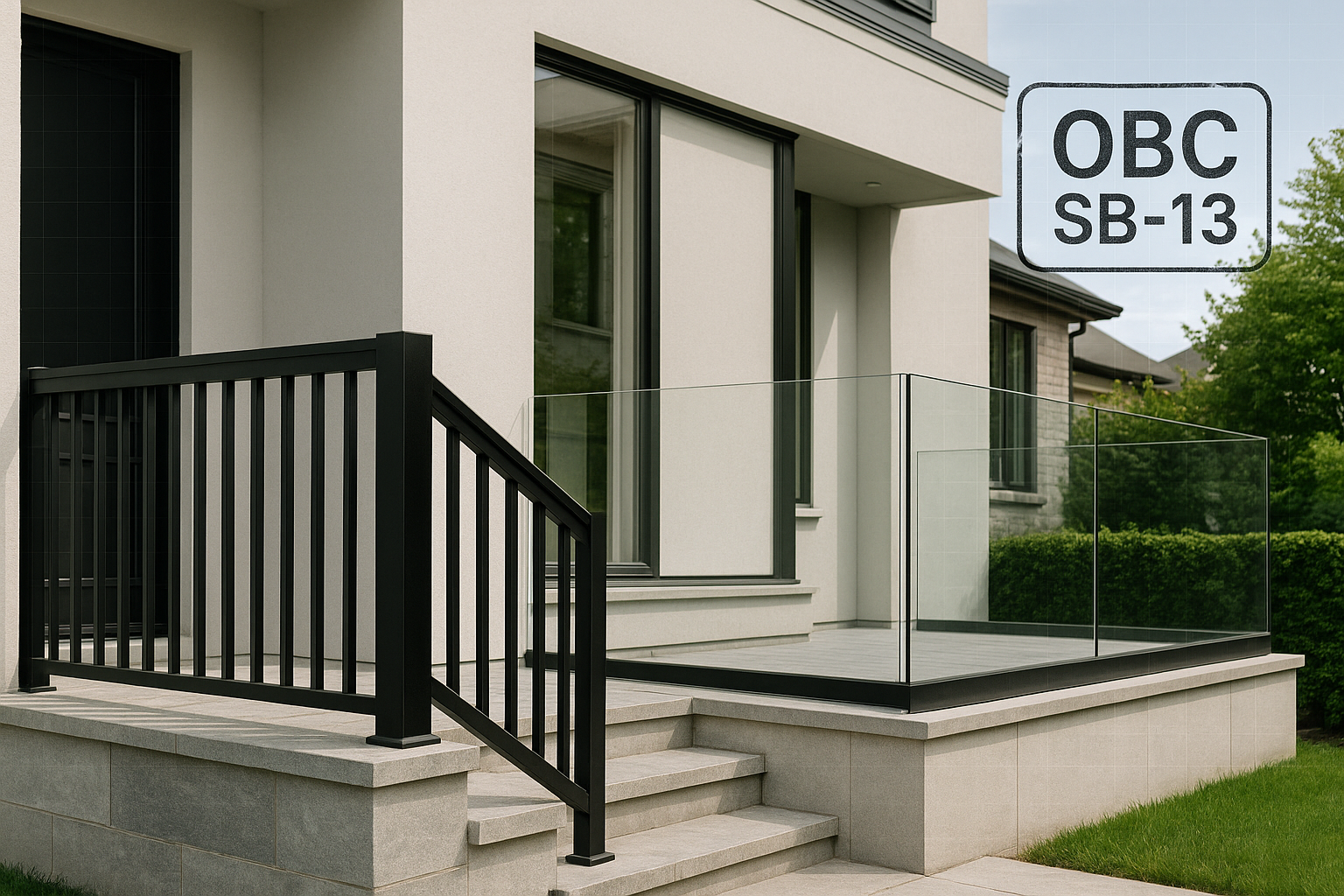
Planning a renovation or new build in Ontario? Whether you’re upgrading a deck, balcony, staircase, or pool area, railing compliance with the Ontario Building Code (OBC) is non-negotiable.
Failing to meet the latest SB-13 safety requirements can result in failed inspections, costly rework, project delays, or even liability issues. This guide breaks down what you need to know about railing heights, spacing, and safety rules in Ontario—in plain language.
Why Railing Code Compliance Matters
Railings are not just decorative features. Under Ontario law, they are life-safety systems designed to prevent falls, injuries, and unauthorized access—especially for children.
Municipal inspectors strictly enforce railing regulations. Even minor deviations (wrong height, improper spacing, incorrect glass thickness) can trigger a failed inspection.
Bottom line:
If your railing doesn’t meet code, it doesn’t pass—no matter how good it looks.
Ontario Building Code (OBC) Overview: What Is SB-13?
SB-13 refers to Supplementary Standard 13 of the Ontario Building Code, which governs:
Guard (railing) heights
Opening limitations (spacing)
Structural load requirements
Glass safety standards
SB-13 applies to:
Residential homes
Multi-unit buildings
Commercial properties
Balconies, decks, stairs, landings, and pool enclosures
Minimum Railing Heights in Ontario
1. Decks, Balconies & Landings
A guard (railing) is required when a walking surface is more than 24 inches (600 mm) above grade.
Minimum Heights:
36 inches (915 mm) → Residential decks & balconies
42 inches (1065 mm) → Commercial, multi-residential, and some high-risk applications
Many municipalities default to 42 inches even for residential projects—always confirm locally.
2. Stair Railings
Guards are required on open sides of stairs
Handrails and guards are different components but often integrated
Typical requirements:
Guard height on stairs: 36 inches minimum
Handrails must be graspable and continuous
Opening & Spacing Rules (Child Safety)
One of the most strictly enforced rules in Ontario:
A 100 mm (4 inch) sphere must NOT pass through any opening.
This applies to:
Aluminum picket spacing
Glass railing gaps
Horizontal components (climb prevention)
This rule exists to prevent children from slipping through or becoming trapped.
Glass Railing Safety Requirements
Glass railings are permitted—but only when specific safety standards are met.
Approved Glass Types:
Tempered safety glass
Laminated safety glass (in certain applications)
Typical Thickness:
10 mm or 12 mm tempered glass for most guard systems
Additional Requirements:
Polished edges
Proper anchoring systems
Load testing compliance
Standard window glass is NOT allowed in guard applications.
Pool Fence & Pool Railing Requirements (Ontario)
Pool areas have additional safety rules, often enforced at the municipal level.
Common requirements include:
Minimum 48-inch fence height
Self-closing, self-latching gates
Climb-resistant design
No horizontal elements on the exterior side
Gate hardware located out of child reach
Glass pool fences must use thicker tempered glass and certified hardware.
Load & Structural Strength Requirements
Railings must withstand:
Horizontal loads (people leaning)
Wind loads (especially on balconies)
Snow loads (in exposed areas)
This is why professional fabrication and installation matters. A railing that “looks solid” may still fail load testing.
Common Reasons Railings Fail Inspection
Homeowners and contractors most often fail inspections due to:
Incorrect railing height
Gaps exceeding 100 mm
Non-compliant glass
Improper anchoring into wood or concrete
Horizontal elements that create a climb hazard
Missing documentation or manufacturer specs
These failures often mean removal and replacement, not simple fixes.
Residential vs Commercial: Know the Difference
Commercial and multi-unit buildings:
Require 42-inch guards almost universally
Face stricter enforcement
Often require stamped drawings or engineering confirmation
If you’re unsure which category your project falls into, always assume the stricter requirement.
How Aluminum Solutions Ensures Code Compliance
At Aluminum Solutions, code compliance is engineered into every system:
Designed to meet or exceed Ontario Building Code (SB-13)
Fabricated in the GTA with certified materials
Proper glass thickness, spacing, and anchoring
Clean installations that pass inspection the first time
Full documentation available when required
We work directly with homeowners, builders, and inspectors to eliminate guesswork.
Final Thoughts: Build It Once, Build It Right
Railing safety is not an area to cut corners. The Ontario Building Code exists to protect people—and inspectors enforce it accordingly.
Whether you’re installing:
Aluminum railings
Glass railings
Pool fences
Balcony or stair guards
Code compliance should be non-negotiable.
Planning a Railing Project in Ontario?
If you’re unsure whether your design meets code—or want peace of mind before installation—our team can help.
Get a code-compliant quote today.
We’ll make sure your project looks great and passes inspection.
Get a Free Estimate →